

OpenClaw feels magical because it makes that “doing” accessible. Under the hood it’s less mystical: a fixed work loop, smartly packaged so you can run it anywhere. A gateway, sessions, tools, and extensions (“skills”) translate a plain-language goal into a repeatable cycle: think, execute, observe, adjust. A thermostat, but with far more knobs: set a goal, take action, measure the effect, repeat until you reach the desired temperature.
Two quick terms, because otherwise this moves fast. In this piece, by OpenClaw I mean this new wave of open agent runtimes and copy-pasteable setups that let people run and share autonomous tasks with very little friction. AGI is short for Artificial General Intelligence: the idea of a system that goes beyond one narrow trick and can flexibly pick up a wide range of tasks, more like humans do.
What makes OpenClaw different?
What makes OpenClaw different from Microsoft Copilot, Claude Code, or OpenAI’s Codex? The difference is in the constraints, not in what it can do. To be fair: it’s also an old technique in a new jacket. We’ve seen the pattern before; only now it’s packaged as something anyone can switch on.
The big commercial players ship their agents with solid guardrails. It doesn’t stop at rules in text: there are hard constraints, such as permissions, sandboxed environments, and moments where the system must ask: “do you really want this?”.
With OpenClaw, the boundaries are on you. You decide how sharp the limits are, or you assume they exist because everything looks so friendly and smooth.
That’s exactly why agent behavior suddenly shifts from “something engineers do” to “something anyone can turn on.” With all the consequences that come with it.
The direction was visible already
We saw the direction early. AutoGPT went viral right after the first ChatGPT wave: not because it worked perfectly, but because the idea was irresistible: a model that takes steps on its own. Later, Manus arrived as a working preview that the pattern can hold up in practice, as long as you keep it within clear boundaries. Last summer, “computer-using” agents inside chat interfaces made it tangible for everyone: read context, click and type, review the result, try again until it works. Only: those public systems were still well shielded. They kept users away from the raw reality of what can go wrong when you don’t just let a model advise, but let it execute.
The social experiment
Now the social experiment is complete: we give up control faster than we understand how to take it back. Most people have no idea how to clean up a system after a mistake, how to rotate keys and passwords, how to clamp down network access, or how to reconstruct what happened afterward. Yet they connect always-on agents to chat apps, browsers, files, and accounts. Maybe even more worrying: part of my AI-trained network is joining in enthusiastically, with an innocent sense of inevitability, as if it’s simply “personal responsibility,” while the prerequisites for most users just aren’t there.
Viral like a virus
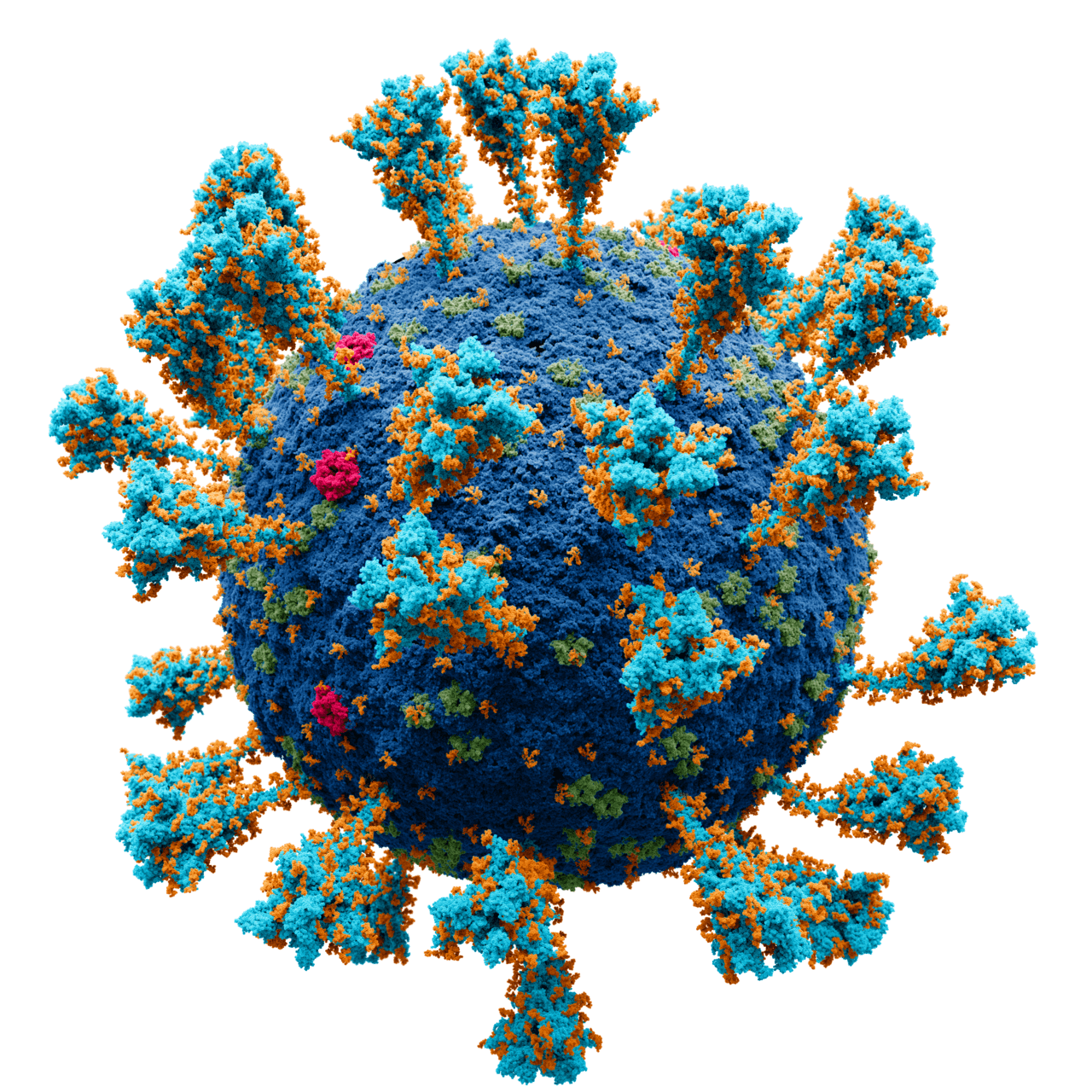
Biology fits better here than blockchain. OpenClaw behaves like a virus not because it’s malicious, but because it spreads through the same logic as a biological virus. Think COVID-19: rapid spread, variants, copies that are each slightly different, and a dynamic you can’t put back in the bottle once it’s everywhere. The same applies here: decentralized, endlessly copied, and practically impossible to roll back. Once an ecosystem forms around extensions, tweaks, and ready-made setups, once it becomes copy-paste deployable, it doesn’t disappear. It becomes background infrastructure.
Something else emerges too: the hype starts to feed itself. If a large share of what we read online is already written by machines, who amplifies “download this autonomous agent”? Increasingly: other agents. Don’t picture one central, evil super-AI; these are masses of echo machines that scrape, post, recommend, package, and re-package. This doesn’t only happen on AI-only platforms. On mainstream social media, the share of automatically generated or automatically boosted content is growing fast. That’s how swarm behavior emerges without a conductor: a dense network of systems that amplifies what spreads best.
The next hurdle: proving you’re human
We’ve seen this before too. When scrapers and bots started overwhelming web services, reCAPTCHA arrived as a counter-reaction. It wasn’t elegant. Irritation and abuse build pressure quickly. We may be on the verge of the next hurdle: proof that you’re human, now in many more forms than clicking on a few images.
Once a restaurant gets called four hours a day by voice bots for reservations, or when a customer-service AI is mostly talking to a customer’s AI, organizations will add friction. Rate limits, paywalls, identity checks, mandatory human-in-the-loop moments, or even new protocols where machines must identify themselves as machines. That won’t be a philosophical choice: otherwise the system jams.
Factors that slow it down
There are braking forces, though. The first is simply money: OpenClaw itself may be open, but a smart enough “brain” still usually runs on paid models. If agents keep chattering and iterating, costs rise fast and part of the hype cools down on its own once the invoices arrive. The second brake is liability and regulation: if things go wrong too often, the big model providers will tighten usage further because the legal, reputational, and oversight risks become too large.
But even then it won’t disappear. Cheaper, less constrained language models will always remain available: open or semi-open, local or hosted by smaller providers, where safety is an option rather than a default. That’s exactly what makes the whole landscape less trustworthy: the same tool and skill layer can run tomorrow on a far less restrained “brain.” That increases incidents and reduces transparency: less logging, fewer audit trails, vague origins of behavior, diffuse responsibility. When the big players clamp down, the behavior doesn’t vanish; it moves to the edges. At the edges the guardrails are thinner, and it’s harder to reconstruct what happened, and why.
A geopolitical layer
On top of that comes a geopolitical layer. If US providers restrict certain forms of agent behavior, that doesn’t mean it disappears globally. Supply and adoption shift to providers in other countries that are willing or allowed to offer it, for commercial or strategic reasons, or simply because their oversight is structured differently. The result is that tightening works locally, but globally mostly redistributes: less visible and better regulated in one bloc, more gray, cheaper, and less transparent in another. It starts to look like an arms race; a prisoner’s dilemma: no one wants to be the first to hit the brakes if everyone else keeps driving. Like the Manhattan Project dynamic, it tends to accelerate development rather than produce a collective decision that maybe it would be wiser to pause for a moment.
From hype to governance
Where this lands for me: stopping isn’t an option anymore. Autonomous AI becomes a new layer in our digital environment, not a feature, whether we like it or not. Moving from hype to governance takes tech and rules, and above all bringing people along. Education and awareness are the foundation: knowing what you’re handing over, how you set boundaries, and what you do when things go wrong. That’s the difference between a swarm that happens to you and a swarm you can work with.